sehrang joo

About Papers Ongoing CV

MDiv student at Harvard Divinity School
interested in meaning-making, secular and spiritual

About

Hi, call me Sarah! As of fall 2026, I'm pursuing a Master of Divinity degree at Harvard Divinity School.

Before finding my way to divinity school, I earned an M.A. in cognitive psychology from Princeton University, where I was advised by Tania Lombrozo. My research centered around better understanding the cognitive science of explanation and its overlap with causal reasoning. I also frequently collaborated with Sami Yousif, Joshua Knobe, and Frank Keil, all of whom I met while earning a B.A. in philosophy from Yale University.

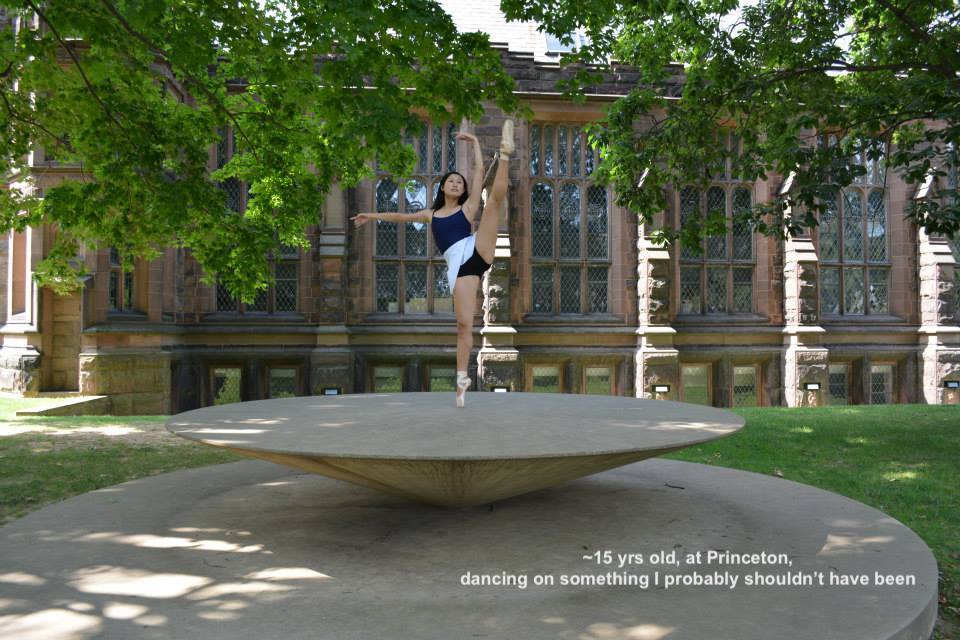
I hope to eventually bring my background in philosophy and cognitive science to bear on my work at HDS and beyond. For now: I'm interested in realism as discussed across philosophy of science and religion, whether and how ministry and spiritual care can operate in secular spaces, and all sorts of odd questions about metaphysics, textual vs. scriptural analysis, building resilient community, and effective public scholarship. When I'm not working on sorting through that tangle of interests, you'll find me reading at least four novels at a time, listening to nerdy podcasts, or trying to relive my previous life as a dancer.

My current work and interests are best represented through updates I'm sharing here. You can access my CV here, a list of my academic publications (for now, largely in cognitive science) here, or reach out via email here.
Publications

Journal Articles and Refereed Conference Proceedings

Joo, S. & Yousif, S.R., Martin, F., Keil, F.C., and Knobe, J. (2025). No privileged link between intentionality and causation: Generalizable effects of agency in language. Cognition.

Joo, S. and Yousif, S.R. (2022). Are we teleologically essentialist? Cognitive Science.

Joo, S., Yousif, S.R., Martin, F., Keil, F.C., & Knobe, J. (2022). No privileged link between intentionality and causation: Generalizable effects of agency in language. Proceedings of the 44th Annual Conference of the Cognitive Science Society . Toronto, Canada: Cognitive Science Society. [PDF]

Joo, S., Yousif, S.R., and Keil, F.C. (2022). Understanding ‘Why’: How implicit questions shape explanation preferences. Cognitive Science.

Joo, S., Yousif, S.R., and Knobe, J. (2021). Teleology beyond explanation. Mind & Language.

Joo, S., Yousif, S. R., and Keil, F. C. (2021). What is a 'mechanism'? A distinction between two sub-types of mechanistic explanations. Proceedings of the 43rd Annual Conference of the Cognitive Science Society. Vienna, Austria: Cognitive Science Society. [PDF]

Joo, S., Yousif, S. R., and Keil, F. C. (2020). Implicit questions shape information preferences. Proceedings of the 42nd Annual Conference of the Cognitive Science Society. Toronto, ON: Cognitive Science Society. [PDF]

Ahl, R.E., DeAngelis, E., Stephenson, A., Joo, S., and Keil, F.C. (2018). It’s complicated: Children identify relevant information about causal complexity. Proceedings of the 40th Annual Conference of the Cognitive Science Society. Austin, TX: Cognitive Science Society. [PDF]


Conference Presentations

Joo, S., Yousif, S.R., Martin, F., Keil, F.C., & Knobe, J. (2022, July). No privileged link between intentionality and causation: Generalizable effects of agency in language. Talk presented at at the 44th Annual Conference of the Cognitive Science Society.
[Winner of the Cognitive Science Society Disciplinary Diversity and Integration Award]

Joo, S. and Yousif, S.R. (2022, July). Are we teleologically essentialist? Talk presented at the annual meeting of the Society for Philosophy and Psychology.

Joo, S., Yousif, S.R., Martin, F., Keil, F.C., & Knobe, J. (2022, May). Does causality matter? Impressions of agency influence judgments of both causal and non-causal sentences. Talk presented at the second Experiments in Linguistic Meaning (ELM) Conference.

Joo, S., Yousif, S.R., and Keil, F.C. (2022, April). Do children have an intuitive belief in God(s)? Children's teleological explanation preferences and intentional design. Talk presented at the 2022 Biennial Cognitive Development Society Conference.

Joo, S., Yousif, S.R., Martin, F., Keil, F.C., & Knobe, J. (2022, January). Does causality matter? Impressions of agency influence judgments of both causal and non-causal sentences. Talk presented at the 2nd annual Agency and Intentions in Language (AIL2) workshop.

Joo, S., Yousif, S.R., and Keil, F.C. (2021, July). What is a 'mechanism'? A distinction between two sub-types of mechanistic explanations. Poster presented at the 43rd Annual Conference of the Cognitive Science Society.

Joo, S., Yousif, S.R., and Keil, F.C. (2021, June - Postponed due to COVID-19). Understanding 'Why': How implicit questions shape explanation preferences. Talk presented at the annual meeting of the Society for Philosophy and Psychology.

Joo, S., Yousif, S.R., and Keil, F.C. (2021, April). How children understand the pragmatics of ‘why’ questions. Talk presented at the biennial meeting of the Society for Research in Child Development.

Joo, S., Yousif, S.R., and Keil, F.C. (2020, July). Implicit questions shape information preferences. Poster presented at the 42nd Annual Conference of the Cognitive Science Society.

Ongoing & Updates

Why divinity school??

08.03.26. I started thinking about the crazy idea of quitting my phd program to apply to divinity school almost a year and a half ago. It's maybe not actually so crazy to go to divinity school as a kind-of, sort-of atheist (check out, for instance, this 2015 essay I love from Vanessa Zoltan about feeling a to divinity school), but the decision still feels so complicated that one of the biggest questions I hope to answer at HDS is something like "well how did someone like me end up wanting so much to do this?" My best attempt, so far, to articulate an answer, is this excerpt from my statement of purpose, available below:


I am not only an atheist; I have long been someone with as little patience for mantras as for thoughts and prayers, who believes in manifestation even less than in divine intervention, and who has never once wanted to call myself “spiritual but not religious.” And yet—

And yet I plan to quit my PhD program to pursue an MDiv.

I am currently studying cognitive psychology under a dream advisor at Princeton University. Nobody in my family has a religious vocation. I have scattered memories of itchy Easter dresses, confusing Korean sermons, and a handful of English Sunday School lessons before my family dropped off attending church in either language altogether. In college, I was a philosophy major— but the kind interested in philosophy of science and modal logic, not Anselm or theodicy. My 16 or 18 or 20 year old self—who would undoubtedly be thrilled by my academic achievement thus far— would be somewhere between baffled and horrified to learn that I now want to exchange it for divinity school.

But in April of 2023, I found myself at Nassau Presbyterian Church on Easter Sunday. Something about the service worked on me and for me—enough to move me to tears and to wanting to return. By the time I thought oh no maybe I want to go to divinity school, I’d spent most Sundays there for nearly two years.

Still, the idea of divinity school felt like an intrusive thought. When I started to read more theology, I did so expecting to quickly lose interest. Instead, Religion for Atheists became A New Christianity for a New World, became Is Nothing Sacred?, became Forgiveness: An Alternative Account. It was CS Lewis and Rachel Held Evans, Simone Weil and Iris Murdoch; it was more philosophy than I’d read in years in the form of Kant, Sartre, Wittgenstein, and Kierkegaard. This went on for an embarrassingly long time before I realized that this whim had become my most compelling intellectual interest.

And still, I wasn’t sure that divinity school was the right idea.

Maybe, though, it wasn’t a crazy idea. Maybe some version of these interests had always been part of my experience. After all, I’d been a high school student who sought out archived commencement addresses in lieu of sermons, a college freshman whose philosophical interests started in practical ethics and wanting to reconcile Aristotelian virtue ethics with her convictions about mental health support, a young researcher whose first project began with the question “Are Children Intuitive Theists?” (Kelemen, 2004), and an avid podcast fan who had dearly loved Harry Potter & the Sacred Text for over 9 years. And I really, really loved church. Atheist or not, week after week, I wanted to be there. I loved what I found there. Maybe it was time to let myself grapple with the difficult question of why I’d so clearly been drawn to this space and these practices.

Part of the answer had to include being honest with myself about the challenges of graduate school thus far. Only months before starting my program, I began experiencing debilitating, near-constant migraines. Let me be explicit: In talking about my health, I actively want to resist making a tidy narrative about discovery through suffering; I didn’t ‘find God’ by getting sick, and even if I had, I would trade any amount of self-realization for the return of my healthy body. But it’s also true that when academic validation was most challenging, I started to think more critically about where I was finding community and what still felt meaningful. When that was most difficult, when I felt most unworthy of the kindness and generosity of supportive mentors and friends, what I found was that I could believe in grace even if I didn’t believe in God.

I’ve come to understand my interest in divinity school as a shift not so much in the content of my interests, but in the priorities and intentions behind them. I came into my PhD program wanting, above all, to one day be a genuinely good mentor—to build community that could support people doing work in which they deeply believed, despite existing within an often-flawed system. Now, I want those commitments to be the focus of my work and attention. I want to live up to the conviction that they are important enough to be the entire goal.

Wrapping up at the Center for Theological Inquiry

07.23.26. I've been lucky enough to spend the last year working part time at CTI, here in Princeton, mostly in connection with scholars working on projects on hope, theology, and AI, and I wrote a magazine piece about my experience thinking about AI from this different perspective.

Here's an excerpt from that piece:

When I started at CTI and learned that AI was CTI’s first area of focus for their new research project, I’ll admit that my initial reaction was disappointment. The fact that even CTI was thinking about AI felt like, to borrow the drama of CTI’s own language, a source of despair. I suppose I was hoping to find at least one place untouched by the way that generative AI was changing the world. Instead, it seemed that even theologians and even independent research centers weren’t immune from the AI craze.

Several months in, and on the other side of CTI’s workshop on Technology and AI, I’m happy to say that was the wrong first impression. If there is hope in the age of AI, I find it in places like CTI and in the conversations that are facilitated here. I agree with Dr. Greggs’ final closing words from the workshop that “At our very best this is what we should be doing.” “This” is having conversations about theology across different people, areas, spheres of work, and expertises—and doing so in ways that bear on existential, human questions. This workshop included people who are leading librarians working in digital humanities, journalists and writers, podcasters, a poet, an English professor…not to mention the cohort of visiting scholars who have spent the last year thinking about AI from their respective perspectives. CTI may not be doing interdisciplinary conversation perfectly; I heard from at least one visitor that they’d had conversations about wanting more interdisciplinary collaboration in higher education in generally, and more also than what is currently possible even at CTI. I’m encouraged, however, that it’s being actively attempted. Being in a room that is even trying to have that challenging, messy, existential conversation is something I found exciting, fascinating, and ultimately hopeful.


As part of my work with CTI, I also gave an interview in the fall magazine about my growing and shifting interests into theology and the study of religion and prepared (and sometimes was lucky enough to interview!) on their flagship podcast.